
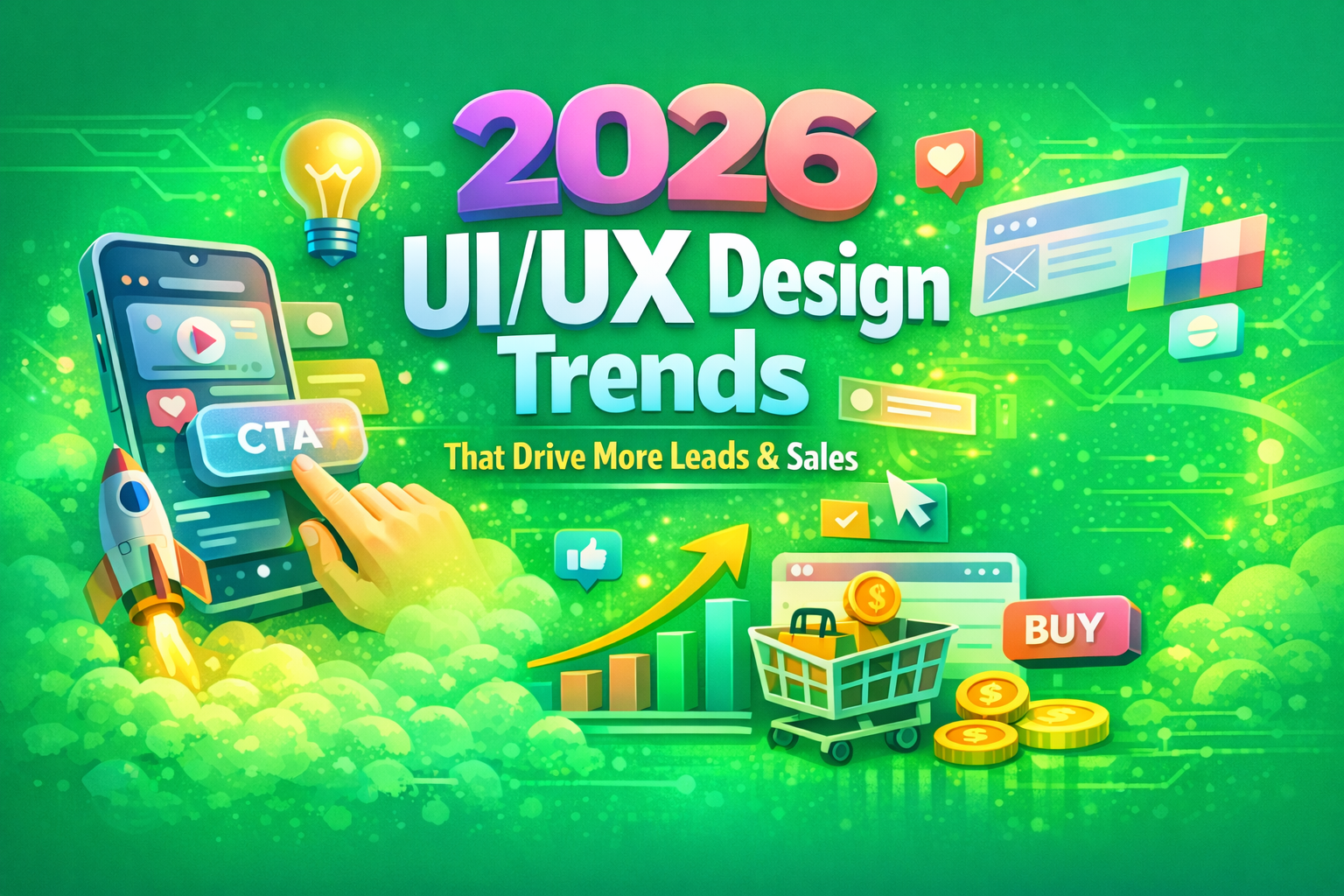
2026 UI/UX Design Trends That Drive More Leads & Sales
UI/UX design has evolved from visual appeal to a conversion-focused business strategy. Users expect fast, intuitive, personalized, and emotionally engaging experiences. Websites and applications that fail to meet these expectations lose potential leads and sales within seconds.
Modern UI/UX trends focus on user psychology, data-driven design, AI personalization, and seamless interaction—all of which directly impact revenue growth. Below are the top UI/UX design trends in 2026 that help businesses convert visitors into loyal customers.
1. AI-Powered Personalized User Experiences
Artificial Intelligence is transforming how users interact with digital platforms. In 2026, AI enables interfaces to adapt in real time based on user behavior, preferences, and browsing patterns.
Personalized dashboards, dynamic CTAs, and tailored content recommendations make users feel understood. When users see relevant content instantly, they are more likely to engage, submit inquiries, or complete purchases—resulting in higher conversion rates and improved customer retention.
2. Conversion-Focused Minimalist Design
Minimalist UI continues to dominate in 2026, but with a stronger focus on conversions. Clean layouts, strategic white space, and simplified navigation help users focus on key actions like sign-ups, contact forms, or purchases.
By removing unnecessary visual distractions, users can quickly understand the value proposition and move smoothly through the sales funnel, leading to reduced bounce rates and increased leads.
3. Micro-Interactions That Guide User Actions
Micro-interactions—such as button animations, hover effects, loading indicators, and form validation feedback—play a crucial role in modern UX.
These subtle design elements provide instant feedback, guide user behavior, and create a sense of responsiveness. When users feel confident that their actions are being acknowledged, they are more likely to complete forms, subscribe, or proceed with transactions.
4. Emotional & Human-Centered Design
UI/UX design in 2026 focuses on emotional engagement. Colors, typography, imagery, and storytelling are strategically used to build trust and connect with users on a human level.
Emotion-driven interfaces increase brand credibility and encourage users to stay longer on the website. A strong emotional connection significantly improves conversion rates and brand loyalty.
5. Advanced Mobile-First & Thumb-Friendly UX
With mobile traffic dominating digital platforms, mobile-first design is no longer optional. In 2026, UI/UX designs are built specifically for one-hand use, gesture navigation, and fast load times.
Large touch targets, simplified menus, and mobile-optimized forms reduce friction, making it easier for users to take action. A smoother mobile experience directly leads to higher lead generation and sales growth.
6. Accessibility-Driven UX for Wider Reach
Inclusive design is a major trend in 2026. Websites that follow accessibility standards—such as proper color contrast, readable fonts, keyboard navigation, and screen-reader compatibility—reach a broader audience.
Accessible UX not only improves user experience but also boosts SEO performance and brand reputation, helping businesses attract more users and convert them into customers.
7. Conversational UI & Smart Chat Interfaces
Conversational UI, including AI chatbots and virtual assistants, continues to evolve. These interfaces offer real-time support, guide users through decision-making, and capture leads 24/7.
By answering questions instantly and recommending products or services, conversational UI reduces hesitation and accelerates the sales process.
8. Data-Driven UX Optimization
Design decisions in 2026 are heavily backed by analytics. Heatmaps, session recordings, and A/B testing help identify user behavior and friction points.
Continuous UX optimization ensures better user flow, improved CTA placement, and higher conversion performance—making design a measurable revenue asset.
9. Seamless Omnichannel User Experience
Users interact with brands across multiple devices and platforms. In 2026, seamless omnichannel UX ensures consistency in design, messaging, and user data across websites, mobile apps, and dashboards.
A unified experience builds trust, reduces drop-offs, and encourages repeat engagement—ultimately increasing customer lifetime value.
10. Performance-Driven UI for Faster Conversions
Speed and performance are critical UX factors. Lightweight designs, optimized images, and fast-loading interfaces improve user satisfaction and SEO rankings.
Faster websites reduce abandonment and encourage users to complete actions quickly, resulting in better lead capture and higher sales.
Conclusion
UI/UX design in 2026 is deeply connected to business growth, lead generation, and sales performance. By adopting AI personalization, emotional design, accessibility, mobile optimization, and data-driven insights, businesses can create powerful digital experiences that convert visitors into customers.
Recent Post
-
 Innovative IT Strategies to Ac...15 Jan, 2026
 -
 Driving Digital Transformation...15 Jan, 2026
 -
 The Future of SEO: Impact of A...15 Jan, 2026
 -
 Best Web Design Trends for Hig...05 Jan, 2026
 -
 How Professional Web Developme...05 Jan, 2026
 -
 The Future of Work: Integratin...14 Oct, 2025
 -
 How Generative AI Is Transform...14 Oct, 2025
 -
 React Native vs Flutter: Which...14 Oct, 2025